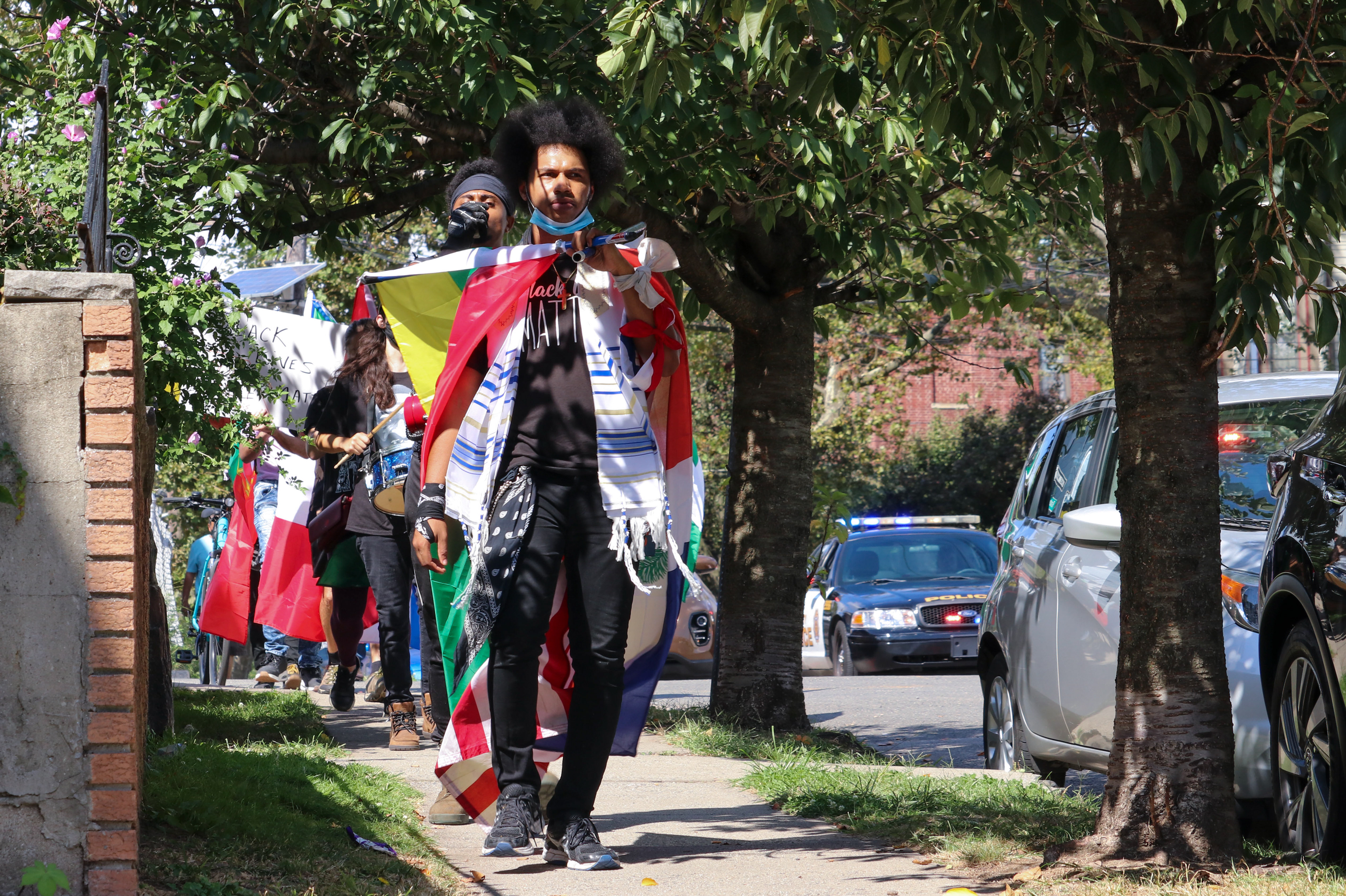
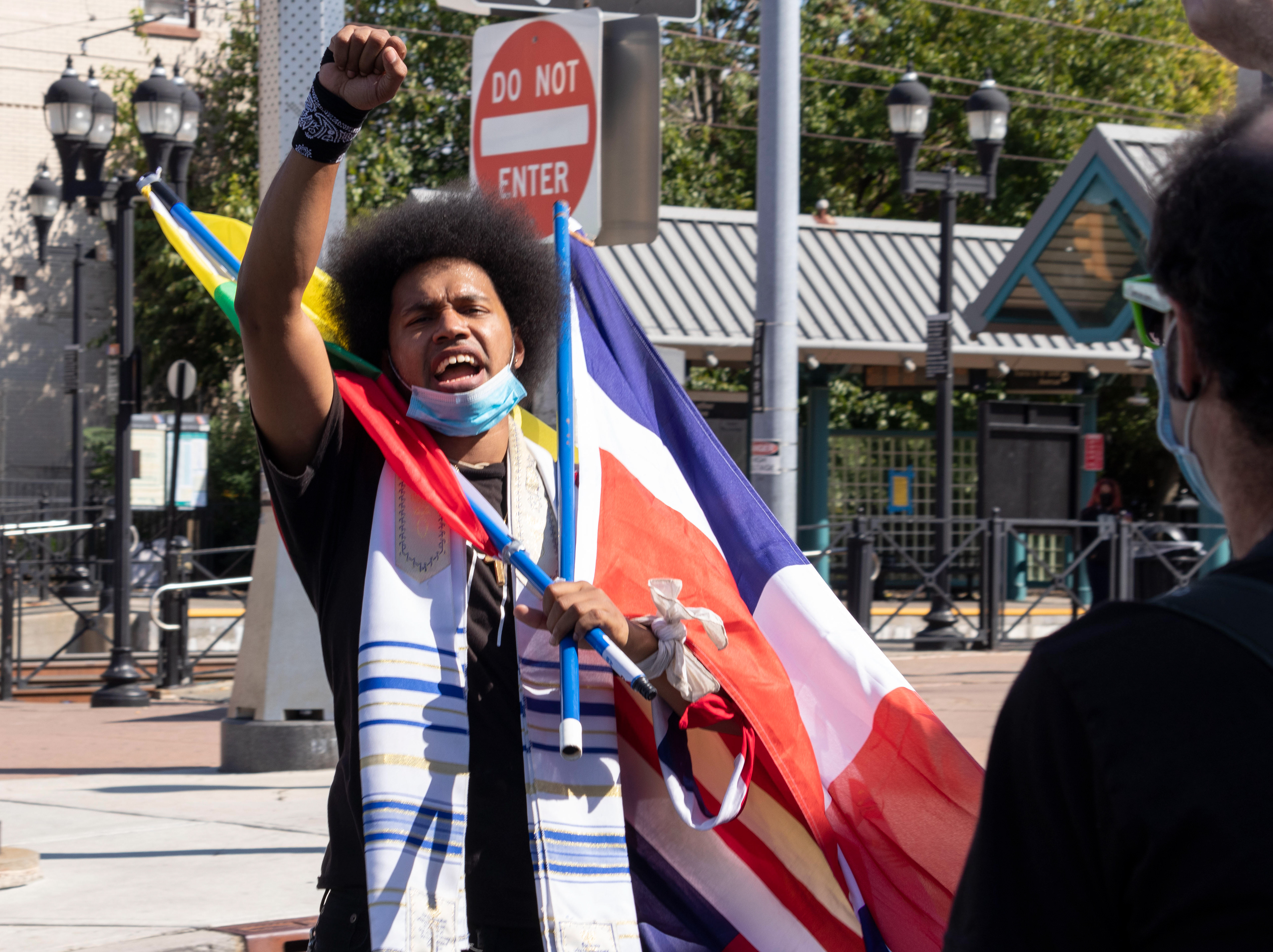
Rostafa walks towards Berry Lane Park where the Kemet Festival is being held in Jersey City. Photo by Sunah Choudhry.
The shooting of George Floyd by Minneapolis police lit a spark causing widespread civil unrest across cities in the United States. Thousands of protesters began to swarm city streets calling for justice and chanting the names of other victims such as Breonna Taylor, Freddie Gray, and Trayvon Martin on May 25, 2020. A town well known for its diversity in New Jersey, Teaneck is being reminded of the troubles many towns face now with civil unrest and lack of transparency between police departments and citizens.
Following Floyd’s death, several social media accounts related to the Black Lives Matter Movement surfaced Instagram and Twitter, initiating protests in local communities including New Jersey calling for community police review boards, defunding the police and local policy change within local government.

Rostafa pauses the protest to prepare chants that follow: “What do we want? A CCRB. When do we want it? Now.” Photo by Sunah Choudhry. 
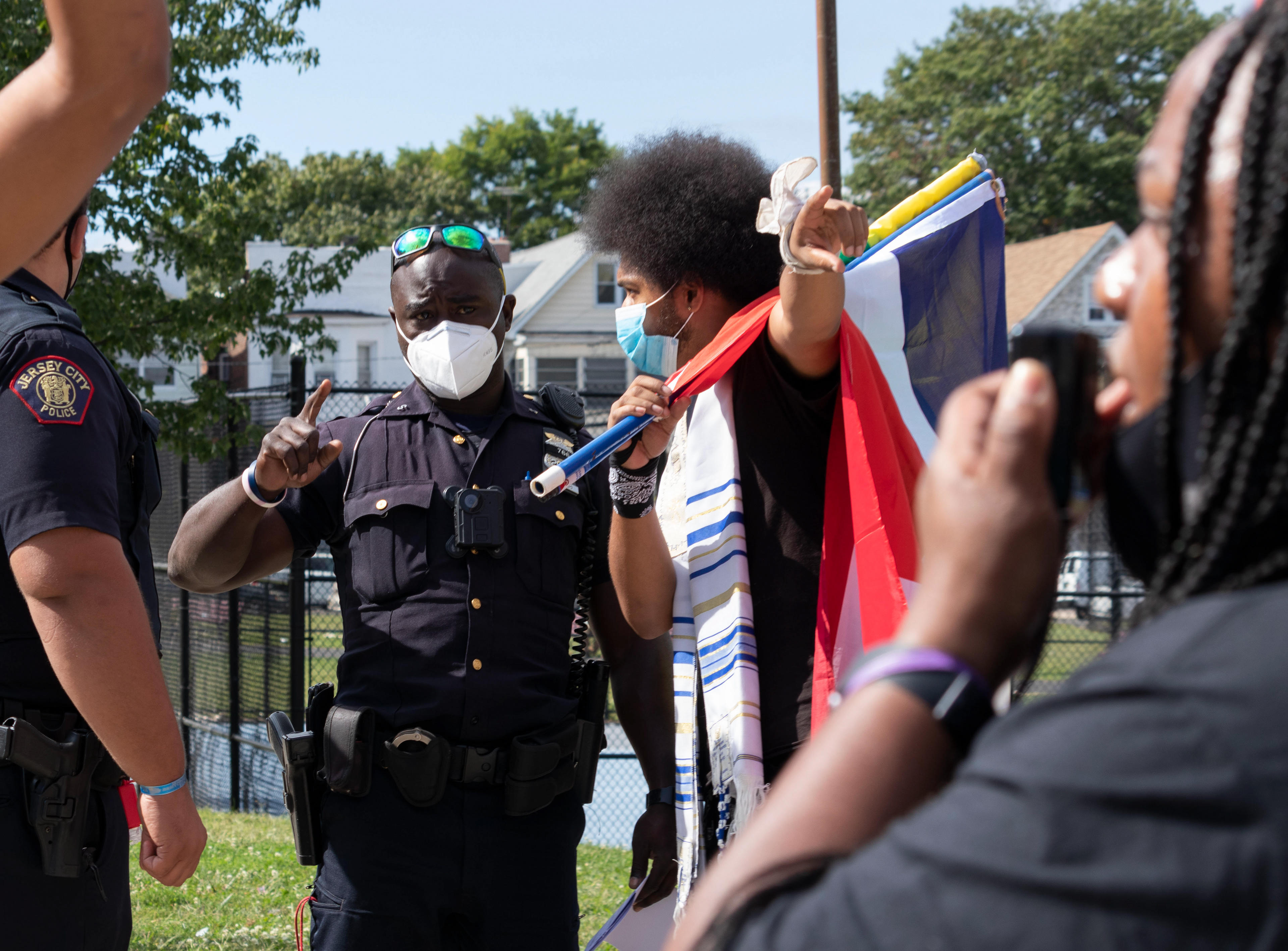
Rostafa speaks with a Jersey City police officer before intiating the protest to Berry Land Park.
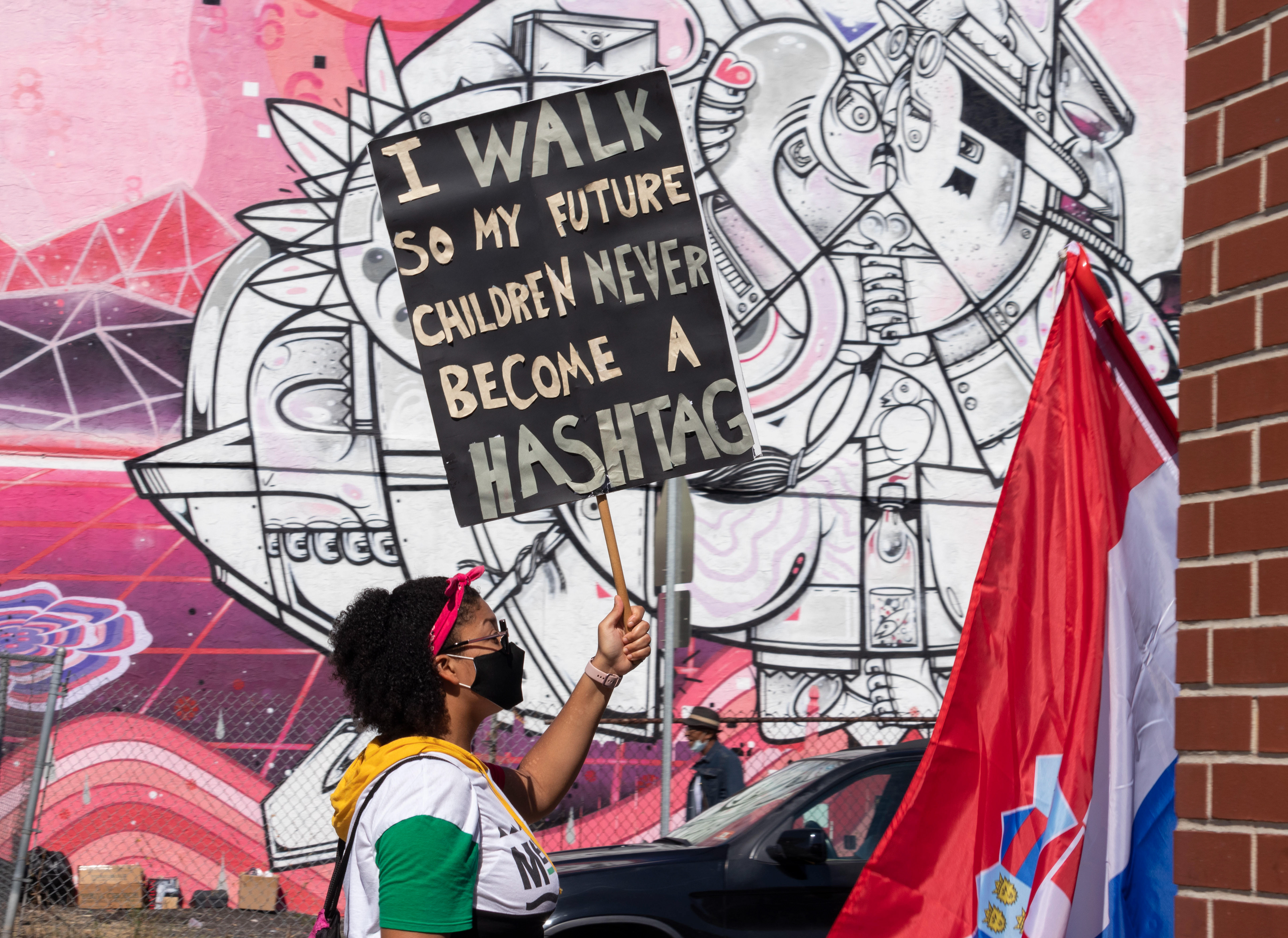
A woman holds up a sign that reads, “I walk so my future children never become a hashtag.”
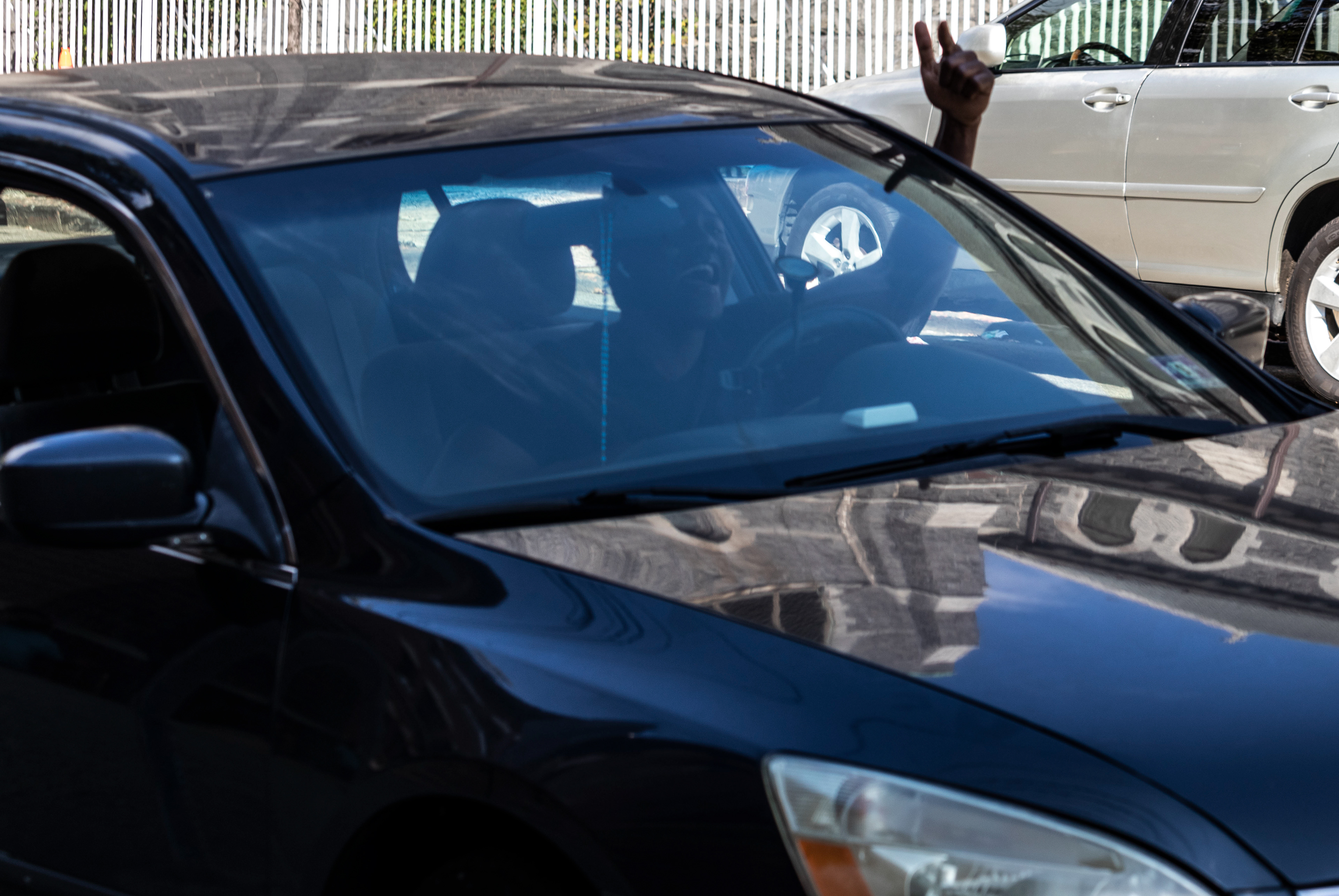
A man gets excited after seeing the peaceful protest and chants from his car in Jersey City. Photo by Sunah Choudhry.
Many of today’s young activists took a page from their predecessors by consistently protesting and demanding change. One of those young activists is a 28-year-old West Orange resident who goes by the name Rostafa. He participates in protests with multiple protest groups across New Jersey including the Ridgewood For Black Liberation, an abolitionist group who are committed to anti-racist work.
“I’m protesting injustice, inequality, oppression, suppression, a, basically a lack of empathy from our leaders,” Rostafa said.
Rostafa recalls hearing of an altercation between two women unrelated to a dress to impress protest in Englewood on Oct 24. Englewood Police intervened claiming the activist group had intiated trouble and arrested four members including organizer Ainsworth Minott. During the altercation, Minott suffered injuries to his knee and ribs which warranted a hospital visit.
“This march that was happening in Englewood on that day was about black excellence,” Rostafa said. “It had nothing to do with protesting against police. It had nothing to do with another shooting.”
According to Pew Research, Black adults are five times more likely as white adults to say they were stopped by police because of their race or ethnicity. 81% of Black adults with a college education say they have experienced racial discrimination and seventeen percent who say it happen regularly. With police being an authoritative figure, the Black community does not feel safe around cops and is the reasoning for the Black Lives Matter Movement.

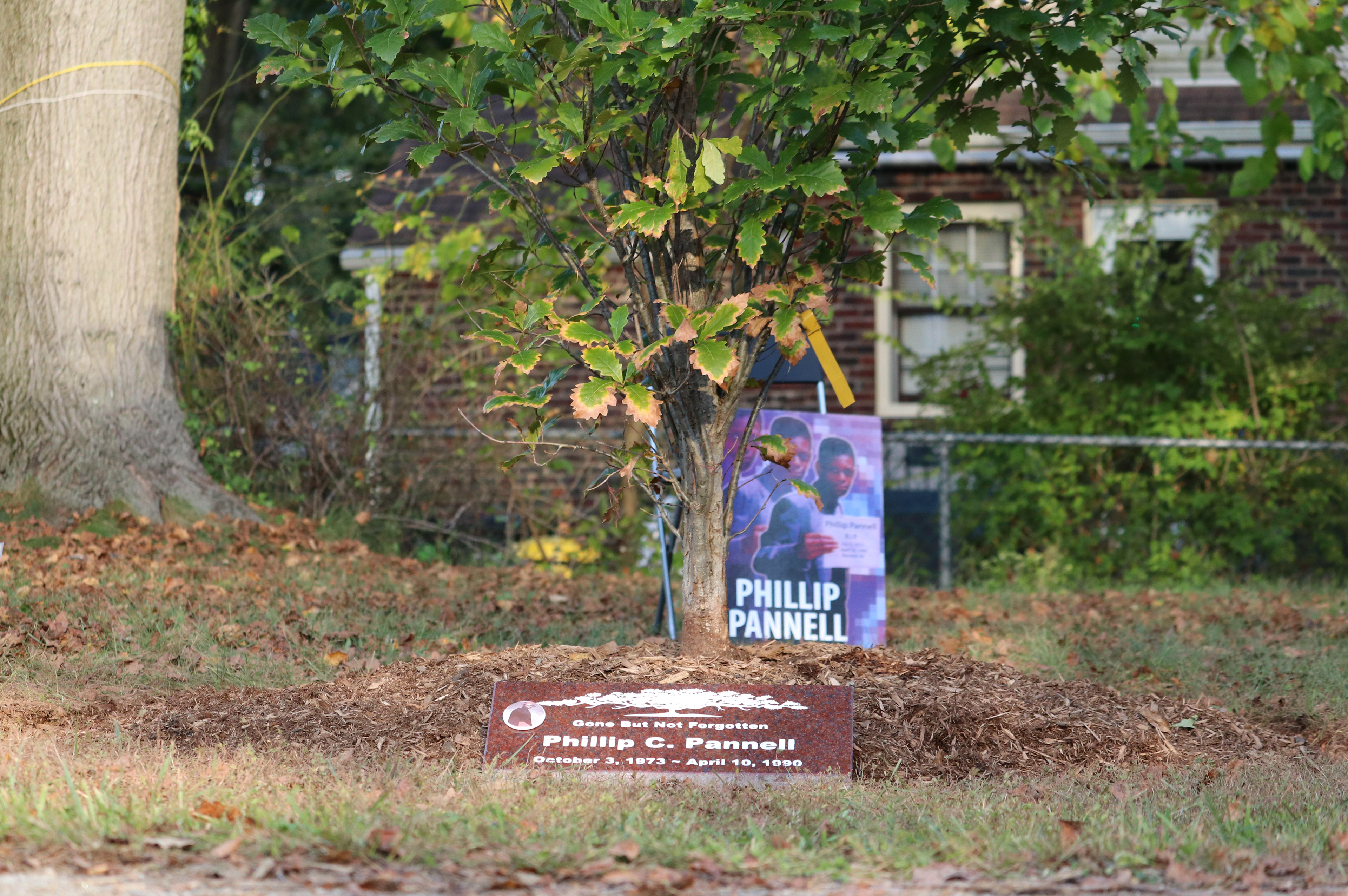
 A new tree and plaque is placed in memory of Phillip Pannell at Bernard E. Brooks park in Teaneck, New Jersey on October 3rd, 2020. -photo by Sunah Choudhry

Longtime newspaper columnist Mike Kelly
Longtime newspaper columnist Mike Kelly authored the book ‘Color Lines’ in 1995 detailing the shooting of Pannell, which found police training to be limited. While researching, he found Bergen County police officers were given deadly force tests.
“The problem here is that what happens with police forces is that their only tool in their toolkit in dealing with a potentially dangerous situation is a handgun,” Kelly said, who has written extensively on race relations for The Record. “And they don’t really seem to have any other tools.”

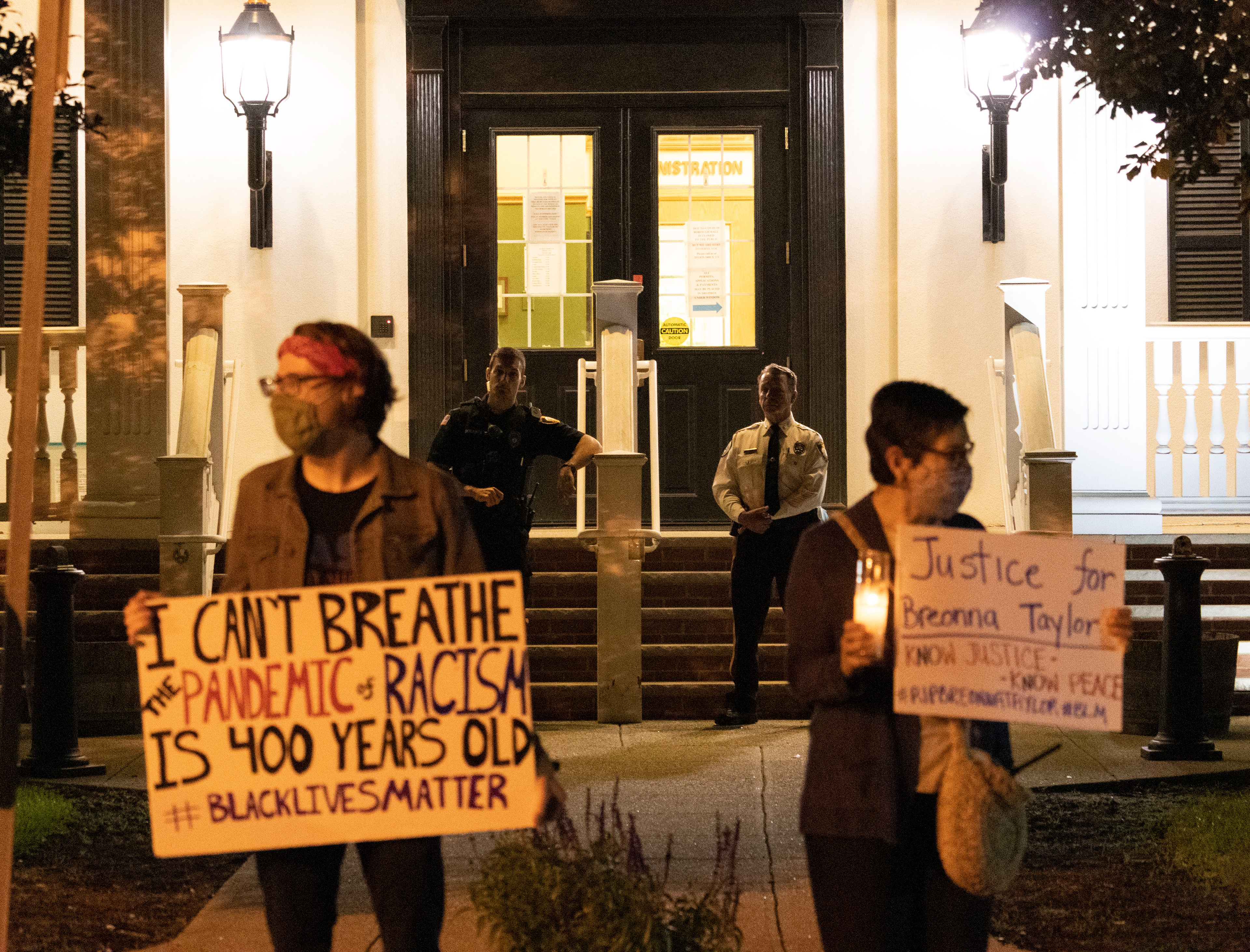
Leader and organizer of RASE Nick Haas (left) and Instagram live stream coordinator Jennifer Sauer protest outside of Ramsey Town Hall during a phone call in to propose a diversity and inclusion committee to advise the council on issues of social justice. Behind them is Ramsey Chief of Police Bryan Gurney and an unidentified police officer. -photo by Sunah Choudhry
Kelly believes defunding the police will not work along with the umbrella of demands Black Lives Matter activist groups seek from local governments. By including topics beyond the purpose of the movement, Kelly suggests the message protesters try to send out may be diluted without a central focus.
“I would argue that I think the Black Lives Matter if it really wants to make a difference, it really needs to change police tactics,” Kelly said. “And really look at police tactics for what they are, and really get to the heart of the matter of that.”
The idea of defunding the police is a new concept and protesters are demanding for cities and towns to review police department budgets after experiencing police brutality and excessive force. In the last year alone, 994 people have been shot by the police and a Washington Post investigation found the FBI underreported fatal police shootings by more than half.

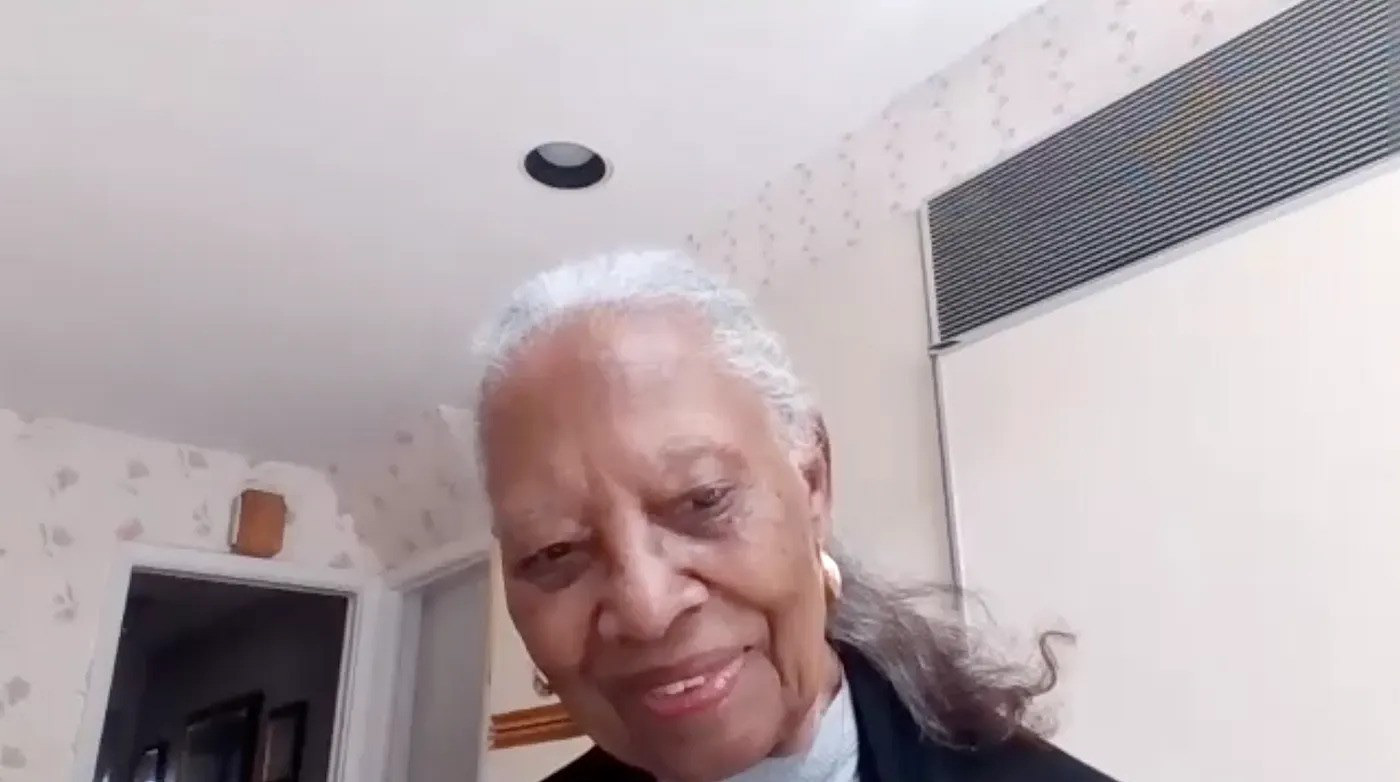
American Civil Rights Activist Theodora Lacey
American Civil Rights activist Theodora Lacey was an active participant in Civil Rights marches of the 1960’s. She was there when Dr. Martin Luther King gave his famous, I have a Dream Speech. Lacey raised her family in Teaneck and went on to become a revered educator after having grown-up in the segregated South.
She remembers whites-only water fountains and being called the n-word but also the steps taken to improve relations between the Black community and white community to achieve accomplishments like desegregating schools.
“There were just meetings and meetings and meetings with people you were friendly with and people you were not so friendly with,” Lacey said. “It was through dialogue that we were able to open up.”
Now 88 years old, she co-founded Teens Talk About Racism (TTAR), an annual diversity conference aiming to involve students to create plans of action to stand up to racism in their schools and communities. No stranger to racism, she speaks about her experiences with the youth of today.
Back then, Lacey recalls not being able to speak up the way the young activists are now. She has strong hopes for the Black Lives Matter Movement uprising with young activists taking the lead.
“We need the energy of the young people,” said Lacey. “We need the inspiration to move forward. Protesting is our right. That’s the American way and it’s what makes democracy work.”
Originally published on Medium.

You may also like

Back to Top